
14 minutes, 14 seconds
-14 Views 0 Comments 0 Likes 0 Reviews
Right, let's just get into it. If you've typed "online yarn stores Australia" into Google more than once this month, you're not alone, and honestly, I don't blame you. There's a lot of noise in the market. Some shops are brilliant, some are just resellers of same mass produced acrylic from big box store, but with a nicer font on the website. There are years of research, yarns I've bought that I shouldn't have and returned, and slowly learning which Australian online yarn stores are worth your time (and money) and which aren't. This post will share everything I've learned. It will not be a listicle, not a "top 10" post. This is a guide to what to look out for, what hand dyed sock yarns really are, why they cost what they cost and how to safely shop online for yarns
Australia's a weird place for yarn shopping if you think about it too long. We're huge, geographically I mean, and a lot of us don't live near a proper yarn shop. I grew up two hours from the nearest decent wool store, so online was always going to be the answer eventually. The thing is, freight costs here aren't small, and a lot of overseas stores either don't ship to Australia at all or slap on customs fees that make your $30 skein suddenly cost $55. That's why local online yarn stores in Australia matter so much. You're not just paying for convenience, you're avoiding a headache of international shipping, GST surprises, and waiting six weeks for a parcel that got stuck in customs somewhere. Buying local also means the yarn's often already suited to our climate too, lighter weights for warmer states, that sort of thing, which nobody tells you until you've knitted a jumper that's basically a sauna suit.
Okay so here's where people get confused, and fair enough, because the marketing around this stuff can be vague at best. Hand dyed sock yarn isn't just "yarn that's a nice colour." It means an actual human, usually working from a small studio or even their kitchen table, has taken undyed base yarn and applied dye by hand, often in small batches, sometimes literally one skein at a time. That's different to commercially dyed yarn, which goes through big vats and comes out perfectly uniform, every single time, no variation. Hand dyed stuff has character. Slight tonal shifts, sometimes a bit of pooling when you knit it up, occasional surprises in how the colour repeats. Some people love that unpredictability. Some hate it. I'm firmly in the "love it" camp, but I get why a beginner might find it frustrating on their first pair of socks.

People obsess over colour, understandably, it's the fun part. But the base yarn underneath the dye is honestly just as important, if not more. Most sock yarn in Australia is a wool and nylon blend, usually something like 75% merino and 25% nylon, because pure wool socks wear through at the heel embarrassingly fast. The nylon adds durability without ruining the softness too much. When you're browsing online yarn stores in Australia, don't just scroll past the fibre content, actually read it. A cheap base yarn dyed beautifully is still a cheap base yarn. It'll pill, it'll felt weird in the wash, and your hard work knitting a pair of socks deserves better than that. Ask the dyer, if it's a small business, what base they use. Most will happily tell you, they're usually proud of it.
This is where I see a lot of confusion, and honestly some frustration too. You'll see hand dyed sock yarn anywhere from $28 a skein to well over $45, and people ask why the gap's so huge. A few reasons really. Dye quality and technique play a part, some dyers use acid dyes professionally with proper fixing processes, others are still figuring it out (nothing wrong with that, everyone starts somewhere, but it shows in the wash-fastness). Then there's batch size, small independent Australian dyers working solo can't buy base yarn in the same bulk quantities as bigger operations, so their costs per skein are higher. And frankly, some of it's just brand positioning. A well known dyer with a loyal following can charge more because people trust the product and the aesthetic. None of these prices are necessarily "wrong," you just need to know what you're paying for.
There's a few tells I look for before I hand over my card details on a new site. First, actual photos of real knitted swatches, not just skeins sitting pretty on a table. Colour looks different once it's actually worked up, and a shop confident in their product will show you that. Second, clear fibre content and yardage listed, not buried in fine print or missing entirely. Third, and this one's underrated, check if they mention dye lots or batch numbers. If you're buying enough yarn for a bigger project, like a shawl, you need skeins from the same dye lot or you'll get visible colour differences partway through. A store that thinks about this detail is a store that actually understands knitters, not just a store trying to shift stock.
I'll be honest, I've got a soft spot for the small operators. The one-person studios, dyeing yarn between school pickups or after their day job, packaging it up on the kitchen table. Buying from them supports actual Australian small business, keeps money in the local economy, and often gets you access to genuinely unique colourways you won't find anywhere else. That said, bigger online yarn stores in Australia have their place too, particularly if you need consistency for a big project, or you want a wider range of weights and fibres in one spot without hopping between ten different Instagram shops. There's no wrong answer here really, it depends what you're after. I tend to mix it up, big retailer for basics, small dyer for the special project yarn.
The biggest one, hands down, is not checking the yardage before buying for a specific project. A standard sock yarn skein is usually around 100 grams and 400 metres, give or take, but this varies between dyers and bases. Buy one skein short and you'll be scrambling to match a dye lot months later, which almost never works out perfectly. Second mistake, ignoring care instructions. Hand dyed yarn, especially anything with looser dye fixing, can bleed in the wash if you're not careful, so always hand wash cold the first time regardless of what the label says, just to be safe. Third thing, and this is a small one but it bites people, forgetting to check delivery times before a gift deadline. Small dyers especially might take a week or two to dye to order rather than shipping from ready stock.
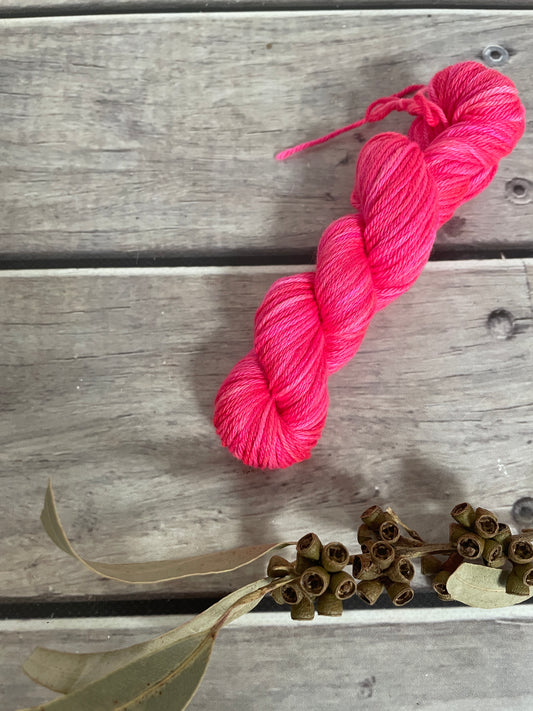
This part's more personal preference than anything technical, but I'll share what's worked for me. Variegated colourways, the ones with lots of colour shifts, look brilliant in the skein but can go a bit "muddy" once knitted into a small, repetitive stitch pattern like socks. Semi-solid or tonal yarns often show off stitch detail better if you're doing anything with texture, cables, that kind of thing. If you're newer to this, honestly, start with a speckled or lightly variegated yarn, it hides small mistakes really well and still looks gorgeous. Save the wild, high contrast rainbow skeins for simple stockinette projects where the colour gets to be the star of the show without competing with a fancy stitch pattern.
So where does that leave you. Honestly, the best approach is to not rush it. Bookmark a few online yarn stores in Australia that feel trustworthy based on what we've covered, actual swatch photos, clear fibre info, honest pricing. Then buy a single skein first before committing to a whole project's worth from a new dyer. Test the wash, see how the colour behaves knitted up, decide if you love the base yarn's feel against your skin, socks sit right against your foot all day, that matters more than people think. Hand dyed sock yarn is genuinely one of the loveliest parts of the whole knitting hobby, in my opinion. Unique, a bit unpredictable, made by real hands rather than a factory line. Take the time to find dyers and stores whose work you actually connect with, and your sock drawer will thank you for years.
What is the best online yarn store in Australia for beginners?
There isn't one single "best," it really depends what you're knitting. For beginners, look for online yarn stores in Australia with clear fibre content descriptions and good customer service, since you'll likely have questions early on.
Is hand dyed sock yarn worth the extra cost?
For most knitters, yes. You're paying for a small batch, often unique, product made with more care than mass dyed alternatives, and the colour depth is usually noticeably better.
How much sock yarn do I need for one pair of adult socks?
Most adult socks need somewhere between 350 and 400 metres of standard fingering weight sock yarn, though this varies with foot size and pattern.
Does hand dyed yarn bleed colour when washed?
Sometimes, particularly on the first wash. Always hand wash cold separately the first time to be safe, regardless of what's on the label.
Can I buy hand dyed sock yarn direct from Australian dyers online?
Yes, many small Australian dyers sell directly through their own websites or platforms like Etsy, often offering colourways you won't find through bigger retailers.

At our community we believe in the power of connections. Our platform is more than just a social networking site; it's a vibrant community where individuals from diverse backgrounds come together to share, connect, and thrive.
We are dedicated to fostering creativity, building strong communities, and raising awareness on a global scale.


